
The Best Sound Blocking Bedroom Treatments for Light Sleepers
Why Your Bedroom Noise Problem Is Harder to Solve Than You Think
Sound blocking bedroom treatments are materials and methods that reduce how much noise enters or escapes your bedroom — and the best ones combine multiple approaches.
Here’s a quick overview of the most effective options:
| Treatment | Best For | Noise Reduction |
|---|---|---|
| Mass Loaded Vinyl (MLV) | Walls, floors | 15-20 dB |
| Solid-core door | Hallway noise | 20-30 dB |
| Weatherstripping + door sweep | Door gaps | 8-13 dB |
| Soundproof curtains | Windows | 5-10 dB |
| Cellular/honeycomb shades | Windows | Up to 70% sound energy |
| Acoustic panels | Walls | 5-15 dB |
| Thick rug + pad | Floor noise | 3-5 dB |
| Window inserts | Street noise | 10-15 dB |
You finally fall asleep. Then a car horn. Or your neighbor’s TV. Or footsteps from upstairs.
Sound doesn’t knock — it finds every crack, gap, and thin surface and walks right in. Research shows that sounds above 35 decibels can fragment sleep cycles, and chronic exposure above 40 decibels raises cortisol levels, adding real stress to your body overnight.
The frustrating part? Most bedrooms are built with exactly the wrong materials for blocking noise. Hollow-core doors, single-pane windows, and thin drywall are standard in modern homes — and they’re practically a welcome mat for sound.
The good news: you don’t need a full renovation to make a real difference. Whether you rent or own, there are treatments at every price point that can cut bedroom noise by 15 to 25 decibels — enough to turn a disruptive environment into a genuinely restful one.
This guide compares the most effective sound blocking treatments for every part of your bedroom — walls, windows, doors, and floors — so you can choose what fits your budget and situation.

Understanding Sound Absorption vs. Sound Blocking Bedroom Treatments
Before we dive into the specific products, we need to clear up a common misunderstanding. In acoustics, “absorption” and “blocking” are two very different animals. If you buy the wrong one, you’ll still be hearing your neighbor’s midnight snack run.
NRC vs. STC: The Alphabet Soup of Silence
When shopping for sound blocking bedroom treatments, you’ll see two main ratings:
- NRC (Noise Reduction Coefficient): This measures how much sound a material absorbs within a room (think echoes and reverb). It ranges from 0 to 1. A rating of 0.75 means the material absorbs 75% of the sound that hits it.
- STC (Sound Transmission Class): This is the holy grail for sleepers. It measures how well a material blocks sound from traveling through it. The higher the number, the better the silence.
Mass vs. Density
To block sound, you need mass. Think of sound waves like a ping-pong ball. If you throw it at a heavy brick wall, it bounces back. If you throw it at a hanging bedsheet, it pushes right through. This is why materials like Mass Loaded Vinyl (MLV) are so effective; they are incredibly heavy but thin enough to fit behind drywall or over doors.
Types of Noise
We generally deal with two types of noise in the bedroom:
- Airborne Noise: Conversations, TVs, and barking dogs traveling through the air.
- Impact Noise: The dreaded “thud-thud” of footsteps from the floor above or a door slamming.
For a truly non-toxic and eco-friendly approach, we often look for materials like eco-C-tex®, which is made from recycled cotton and cellulose. It requires much less energy to produce than fiberglass and is safer to have near your bed. A great example of a hybrid product is the isolé® Sound Barrier Sheets | Audimute , which uses a 20 STC MLV layer for blocking and a 0.75 NRC eco-C-tex layer for absorption.
Sealing the Weakest Links: Windows and Doors
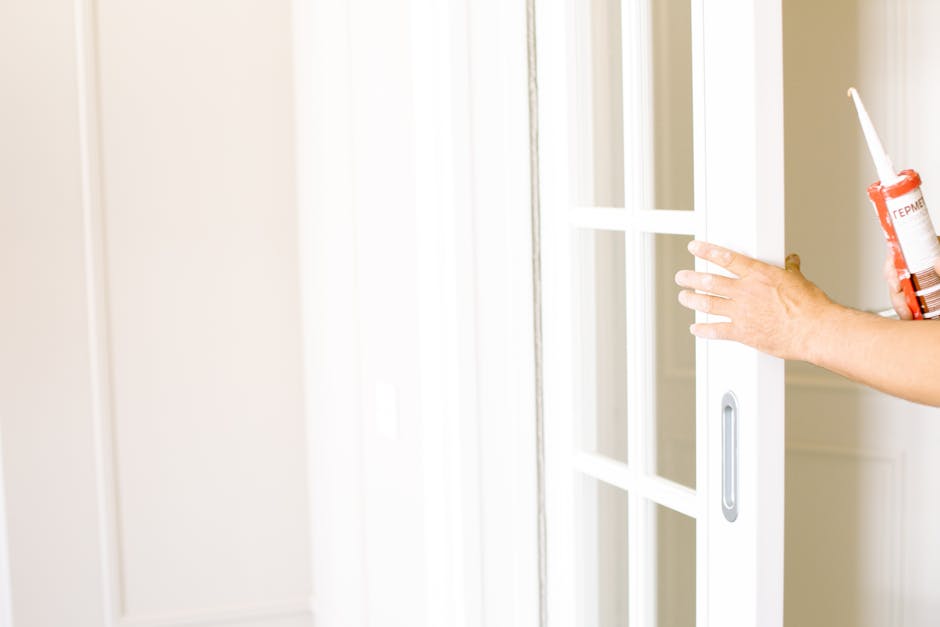
If you take nothing else away from this guide, remember this: Sound travels like water. If there is a gap where air can pass, sound will pour through it. Research shows that a gap as small as 1% in a door or window seal can leak up to 30% of the sound. A 5% gap? That leaks a staggering 90%.
The Quick Fixes
The first step in any bedroom project should be sealing. We recommend using acoustic sealant (caulk that stays flexible) to fill gaps around window frames and baseboards. Unlike regular caulk, acoustic sealant doesn’t crack over time as the house shifts, maintaining that airtight seal.
For your door, you need a two-pronged attack:
- Weatherstripping: Apply rubber or foam strips around the top and sides of the door frame.
- Door Sweeps: Install a heavy-duty sweep at the bottom. For a professional touch, automatic door bottoms drop a seal only when the door is closed, preventing wear and tear on your carpet.
For more detailed help on this, check out our guide on the best acoustic bedroom door seals and liners for peace.
The “Heavy” Solution: Solid-Core Doors
Most modern interior doors are “hollow-core,” which are essentially two thin pieces of wood with air (and maybe some cardboard) in the middle. They act like a drum, amplifying noise. Replacing a hollow-core door with a solid-core door can reduce noise by 20 to 30 decibels instantly.
Window-Specific Sound Blocking Bedroom Treatments
Windows are often the “Achilles’ heel” of a quiet bedroom. Glass is thin, and frames often have tiny air leaks.
- Cellular Shades: Also known as honeycomb shades, these have a unique cell structure that traps air. High-quality versions can absorb up to 70% of sound energy, making them excellent for dampening street noise.
- Heavy Drapery: Forget thin curtains. You want “soundproof” drapes made of fabric weighing 12 to 18 oz per yard. For maximum effect, use 100% fullness (meaning the curtain is twice as wide as the window) and mount it 3-4 inches off the wall to create a dead-air space.
- Window Inserts: These are acrylic panels that press into your existing window frame. They create an airtight seal and a significant air gap, which can cut noise by 10-15 decibels without the cost of triple-pane glass.
Renter-Friendly Sound Blocking Bedroom Treatments
We know that many of our readers can’t exactly tear down walls or replace doors. If you’re in an apartment, you need “portable” silence.
- isolé® Sheets: These are heavy-duty blankets with metal grommets. You can hang them over a door or window using simple hooks. When you move, they come with you.
- Draft Stoppers: A weighted fabric tube at the base of the door is a classic for a reason—it works, and it costs almost nothing.
- Furniture Staggering: Placing a heavy, full bookshelf against a shared wall with a noisy neighbor provides mass and breaks up sound vibrations.
- Tension Rods: Use these to hang thick blankets or acoustic quilts over windows or doorways without drilling holes.
For those on a tight budget, we’ve put together a list of silence is golden diy bedroom soundproofing for the frugal homeowner that covers even more renter-safe hacks.
Advanced Wall and Floor Sound Blocking Bedroom Treatments
If sealing the gaps wasn’t enough, it’s time to look at the larger surfaces. Walls and floors act like giant speakers, vibrating with every sound from the other side.
Wall Treatments: Mass and Decoupling
To truly stop sound from coming through a wall, you either need to add massive weight or “decouple” the surfaces so they don’t vibrate together.
| Material | Function | Installation Level |
|---|---|---|
| Mass Loaded Vinyl (MLV) | High-density barrier that adds massive weight to walls. | Intermediate (Behind drywall or hung) |
| AlphaSorb® Panels | Fabric-wrapped panels that block and absorb sound. | Easy (Wall-mounted) |
| PrivacyShield® Kits | Composite foam kits designed for maximum blocking. | Easy/Intermediate |
| Green Glue Compound | A damping glue used between two layers of drywall. | Advanced (Renovation) |
| Resilient Clips | Clips that mechanically separate drywall from studs. | Advanced (Renovation) |
Floor Treatments: Stopping the Thud
If you have a neighbor downstairs complaining about your footsteps—or you can hear their every move—the floor needs attention.
- Rugs and KPSI: When choosing a rug, look at the KPSI (Knots Per Square Inch). A higher KPSI (over 100) means a denser rug that blocks more sound.
- Felt Rug Pads: Avoid cheap foam pads. Thick, dense felt pads are much better at absorbing impact noise.
- Floor Underlayment: If you are laying new laminate or hardwood, always install a dedicated soundproofing underlayment first.
We’ve explored more of these bedroom noise reduction techniques on a budget to help you navigate these bigger projects without breaking the bank.
Frequently Asked Questions about Bedroom Soundproofing
How much does it cost to soundproof a bedroom from budget to professional levels?
Soundproofing costs can vary wildly.
- Budget ($50 – $150): You can get a good door sweep, some weatherstripping, and a pair of heavy blackout curtains. This can drop noise by about 5-10 dB.
- Mid-Range ($200 – $600): This covers window inserts, isolé® sheets, or high-quality acoustic panels. You can expect a 10-15 dB reduction.
- Professional ($1,000+): This involves replacing doors with solid-core versions, adding a second layer of drywall with Green Glue, or installing triple-pane windows. This can lead to a 20-30+ dB reduction.
Can decorative acoustic panels effectively block traffic, snoring, and HVAC noise?
Yes, but with a caveat. Standard “acoustic foam” (the egg-crate stuff) is great for echoes but terrible for blocking heavy noise like traffic or a snoring partner. For sound blocking bedroom treatments, you need barrier panels (like AlphaSorb®) that contain a heavy internal layer. These are much more effective at stopping external noise while still looking like high-end wall art.
What are the most common mistakes to avoid when installing sound barriers?
The biggest mistake is leaving air gaps. If your door seal has a gap at the corner, you’ve wasted your money. Another mistake is using materials that are too light. Egg-crate foam or thin blankets will not stop a car alarm. Finally, many people forget the “flanking paths”—sound can travel through air vents or even electrical outlets. Sealing these with small foam inserts can make a surprising difference.
Conclusion
Creating a quiet bedroom isn’t about one single “magic” product; it’s about a holistic approach. By combining sound blocking bedroom treatments—sealing the gaps in your doors, layering your window treatments, and adding mass to your walls—you can reclaim your sleep.
At TechAvanco, we believe that a peaceful home shouldn’t require a contractor’s license or a second mortgage. Start with the “weakest links” like your door and windows, and build your sanctuary one layer at a time. Your health, your mood, and your energy levels will thank you for it.
Ready to take the next step in your home improvement journey? Discover more professional acoustic tips and turn your noisy house into a quiet home today.
