
Top Rated Soundproof Foam for Your Home
The Best Acoustic Foam Panels Worth Buying Right Now
The best acoustic foam panels available today include these top picks across different needs and budgets:
| Panel / Type | Best For | Thickness | Approx. NRC |
|---|---|---|---|
| Auralex Studiofoam Wave | Home studios, vocal booths | 2″ (1″–3″ wave) | 0.80 |
| ATS Acoustic Panel 24×48 | Broadband absorption, studios | 2″ | 0.95+ |
| Acoustimac Corner Bass Trap | Low-frequency control | 4″ | 0.95+ |
| VEVOR 80-Pack Wedge Panels | Budget home offices, bedrooms | 1″ | ~0.70 |
| GIK Acoustics FlexRange® | Pro studios, hi-fi rooms | 3.5″ | 1.05 |
You’ve probably noticed it before without thinking much about it — that hollow, echoey feeling in a bare room where voices bounce off the walls, or the way background noise seems to bleed into every video call or recording.
Hard surfaces are the culprit. Floors, walls, windows, and ceilings reflect sound waves back into the room. The result? Echo, reverberation, and a generally muddy, uncomfortable listening environment.
Acoustic foam panels fix this by absorbing those reflected sound waves before they cause problems. They’re made from open-cell polyurethane or similar porous materials — the sound enters the foam’s structure and gets converted into tiny amounts of heat and kinetic energy instead of bouncing back at you.
The good news: you don’t need a professional studio build or a big renovation budget. The right foam panels, placed in the right spots, can make a dramatic difference in any room — bedroom, home office, or recording space.
Here’s a quick look at what actually matters when choosing them:
- Thickness drives performance more than shape — 1″ for general control, 2″ for studios, 3–4″ for bass problems
- NRC rating tells you how much sound a panel absorbs (look for 0.70 or higher)
- Shape (wedge, pyramid, egg crate) is mostly aesthetic — it doesn’t meaningfully change absorption
- Placement matters as much as quantity — strategic spots beat covering every inch of wall

Understanding Acoustic Treatment vs. Soundproofing
Before we dive into the product list, we need to clear up one of the biggest misconceptions in home improvement: the difference between “acoustic treatment” and “soundproofing.” Many people buy foam thinking it will stop their neighbor’s dog from barking or keep their loud music from bothering the family in the next room. Unfortunately, that’s not quite how foam works.
Acoustic treatment is about improving the sound inside the room. When we use the best acoustic foam panels, we are using absorption to soak up echoes and reverberation. This makes your voice sound clearer on Zoom calls and your music sound crisper. It works by converting sound energy into a tiny amount of heat through friction within the porous foam fibers.
Soundproofing, on the other hand, is about blocking sound from entering or leaving a space. This requires mass, density, and often structural changes to the walls. While foam can slightly reduce the noise level, it isn’t heavy enough to stop sound transmission. If you are just starting out, check out our DIY Soundproofing Acoustic Panels For Beginners to see how you can tackle these issues on a budget.
When evaluating panels, you’ll often see the Noise Reduction Coefficient (NRC). This is a scale from 0 to 1. An NRC of 0 means the material reflects all sound, while 1.0 means it absorbs it all. High-quality options like the Amplitude™ Acoustic Panel | GIK Acoustics often reach or exceed an NRC of 1.0, meaning they are incredibly efficient at cleaning up your room’s “sonic clutter.”
How to Select the Best Acoustic Foam Panels for Your Space
Choosing the best acoustic foam panels involves more than just picking a color that matches your curtains. You need to consider the frequency of the sound you’re trying to manage.
- Wedge and Pyramid Shapes: These are the most common. While they look “pro,” the ridges are mostly aesthetic. However, they do provide a bit more surface area for sound to hit, which helps with high-frequency flutter echoes.
- Egg Crate: Often the most budget-friendly, these are great for general purpose dampening in home offices.
- Thickness Matters Most:
- 1-inch foam: Best value for general echo control in offices or bedrooms.
- 2-inch foam: The “sweet spot” for home studios and vocal booths, absorbing mid-to-high frequencies effectively.
- 3-4 inch foam: Necessary if you have “boomy” bass issues or are recording instruments with low-end energy.
We’ve found that Using Foam Panels Effectively is less about covering every wall and more about targeting the “first reflection points.”
Best Acoustic Foam Panels for Home Studios and Offices
In a home studio or a dedicated remote work office, you are primarily dealing with the human voice. This occupies the mid-range frequencies. For these spaces, you want a high-density polyurethane foam that won’t crumble over time.
A standout professional option is the Studiofoam® Wave™. It features a dynamic pattern that rises from 1″ to 3″, giving it an NRC of 0.80. It looks upscale and performs consistently in vocal booths and listening rooms.
If you’re looking for a more traditional setup, the Sonic Acoustics | Professional Acoustic Foam 24 Pack is a fantastic choice. These 2-inch wedge panels are specifically designed for podcasters and gamers who need to kill that “bathroom echo” without spending a fortune. They boast an impressive NRC of 0.92, which is quite high for standard foam.
Best Acoustic Foam Panels for Managing Low-Frequency Bass
Bass is the “final boss” of acoustic treatment. Low-frequency sound waves are long and powerful; they tend to bunch up in the corners of your room, creating a muddy, boomy sound. Standard 1-inch foam won’t touch these.
To fix this, you need Bass Traps. These are much thicker and are designed to fit snugly into 90-degree corners. For a high-end solution, the FlexRange® Acoustic Panel | GIK Acoustics uses a patented design with a built-in air gap to catch those stubborn low-mid frequencies that standard foam ignores.
For those of us watching our wallets, you can find effective Acoustic Treatment For Under 100 by focusing your budget on a few key corner traps rather than a dozen thin wall panels.
Strategic Placement and Installation Tips
Where you put your foam is just as important as what you buy. If you place all your foam on one wall and leave the opposite wall bare, sound will still bounce back and forth, creating “flutter echo.”
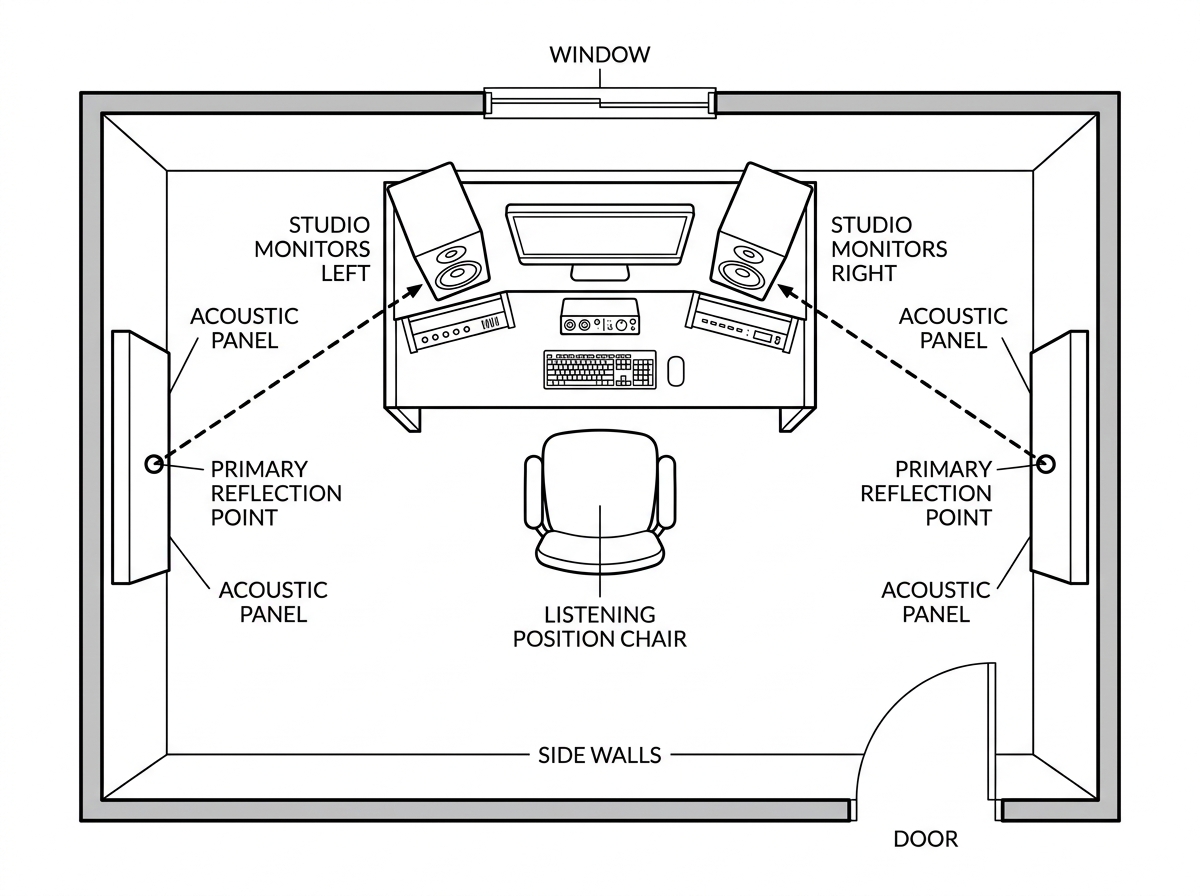
The Mirror Trick: Sit in your main chair. Have a friend slide a mirror along the side walls. Wherever you can see your speakers (or your computer monitor) in the mirror, that is a “primary reflection point.” That is exactly where your first panels should go.
Installation Methods:
- Adhesive Tabs: Great for lightweight foam and won’t ruin your paint.
- Spray Glue: More permanent, but be careful—it can be messy and hard to remove.
- T-Pins: If you have drywall, tiny pins are a great way to hang foam with almost zero damage to the wall.
For a massive project, like a home theater, you might consider the Acoustic Foam Panels, 80 Pack 12 x 12 x 1 in. High Density Soundproof Wall Panels Acoustic Panels Polyurethane Black. This pack provides huge coverage for a very low price per square foot. Just remember that 1-inch panels are best for high-frequency “shimmer” and might need to be paired with thicker panels for a balanced sound. For more help, see our Step By Step Guide DIY Acoustic Foam Panels.
Frequently Asked Questions about Acoustic Foam
How many panels do I need for my room size?
We generally recommend starting with 20% to 30% wall coverage. You don’t want to turn your room into a “dead” box where it feels like you’re under a blanket—that can be disorienting and actually makes music sound worse. Focus on the walls at ear level first. If you’re on a tight budget, check out these Inexpensive DIY Wall Panels For Your Studio to supplement your foam.
Are fire-rated foam panels necessary for home use?
Yes! Safety should always be your top priority. Look for panels that have an ASTM E84 Class A fire rating. This means the foam is treated to be “self-extinguishing,” so it won’t act as fuel if a fire starts. This is especially important if you are placing panels near electronics or studio lights that generate heat. High-quality melamine foam is naturally more fire-resistant than standard polyurethane.
Can I use egg cartons instead of professional foam?
This is a classic “old school” myth. While egg cartons have a cool shape, they are made of thin cardboard that sound waves pass right through. They don’t have the density or the open-cell structure required to absorb sound energy. In fact, they can sometimes make things worse by creating weird reflections. If you’re looking to save money, there are much better Alternatives To Expensive Soundproofing Foam, such as heavy moving blankets or DIY towels-in-frames.
Conclusion
At TechAvanco, our mission is to help you create a more comfortable, productive home environment without blowing your budget on unnecessary gadgets. Finding the best acoustic foam panels is a journey of balancing performance, aesthetics, and price.
Whether you’re trying to clear up your voice for a new podcast or just want a quieter home office to focus in, a few well-placed panels can transform your space from a “clanging cave” into a professional-sounding suite. Start small, focus on your reflection points, and always prioritize fire-safe materials.
Ready to take the next step in your home improvement journey? Explore more cost-effective DIY soundproofing tips and let’s get your space sounding its best!
