
The Science of Using Acoustic Panels Bedroom Noise Reduction
To understand how to tackle acoustic panels bedroom noise, we first have to look at how sound behaves in a typical sleeping area. Most bedrooms are boxes made of “hard” reflective surfaces: drywall, glass windows, wood or tile floors, and flat ceilings. When a sound occurs—whether it’s your alarm, a conversation in the hallway, or a car door slamming outside—the sound waves bounce off these surfaces.
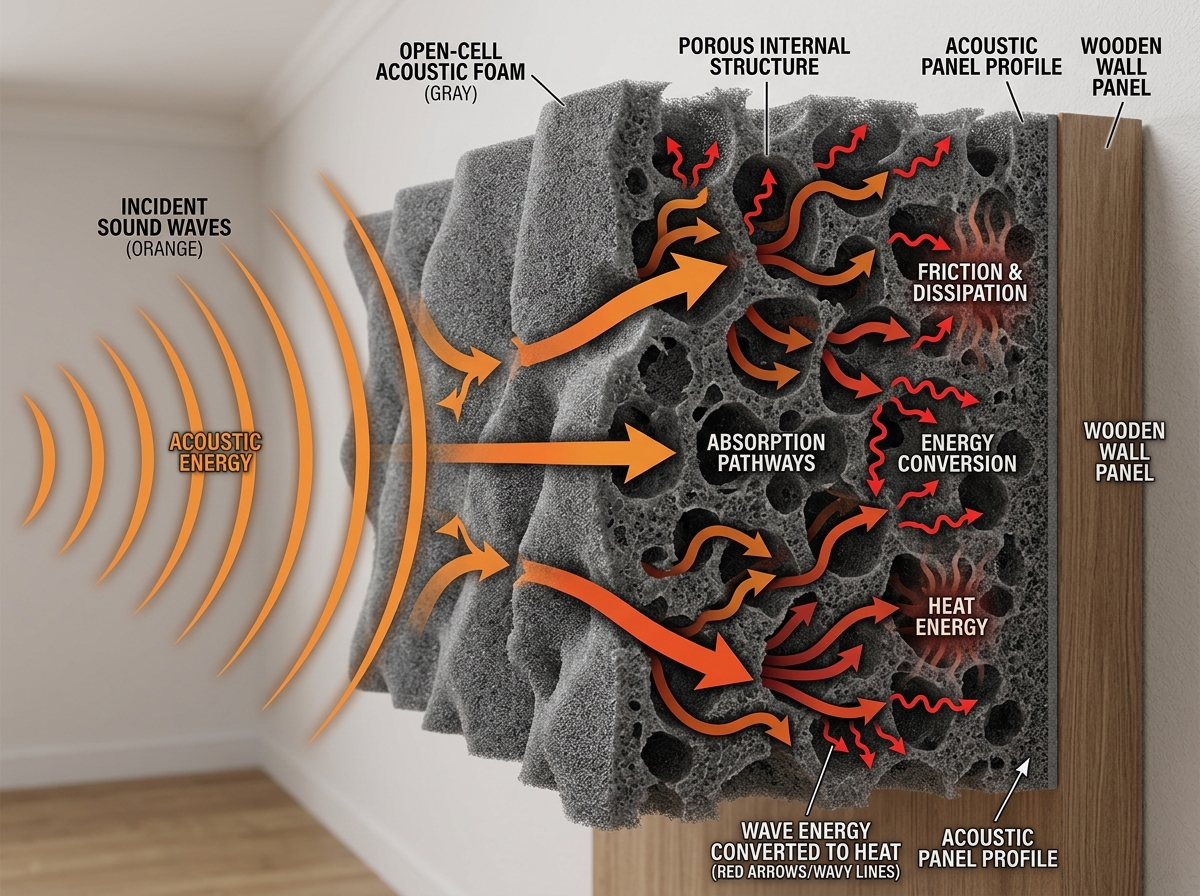
This bouncing is what we call reverberation and echo. In a room with no absorption, sound waves can bounce dozens of times before losing energy. This creates a “loud” environment where even small noises feel magnified. Acoustic panels solve this by introducing “soft” porous materials into the environment.
When a sound wave hits a panel made of foam, mineral wool, or dense felt, it doesn’t bounce back. Instead, the wave enters the material’s open-cell structure. The friction between the vibrating air molecules and the fibers of the panel converts that acoustic energy into a tiny amount of kinetic energy (heat). Essentially, the panel “swallows” the noise.
In the industry, we measure this effectiveness using an NRC (Noise Reduction Coefficient) rating. An NRC of 0 means the surface reflects all sound (like a mirror), while an NRC of 1.0 means the surface absorbs 100% of the sound that hits it. Most high-quality panels for bedrooms range between 0.7 and 0.95. If you are just starting out, check out our diy-soundproofing-acoustic-panels-for-beginners to see how you can achieve these results without a professional lab.
Top Materials for Acoustic Panels Bedroom Noise Control
Not all panels are created equal. Depending on your budget and your style, you’ll want to choose a material that balances performance with bedroom safety.
- Acoustic Foam: This is the most affordable entry point. Usually made of polyurethane, these panels feature wedges or pyramids to increase surface area. They are excellent at catching high-frequency sounds like chirping birds or whistling wind. To get the most out of them, see our guide on using-foam-panels-effectively.
- Mineral Wool: Often used in professional-grade panels, this is a dense, fibrous material made from spun rock or slag. It has incredible absorption across a wide range of frequencies, including lower “thuds” from neighbors.
- Polyester Fiber (PET Felt): These are the rising stars of bedroom acoustics. Made from recycled plastic bottles, they are firm, felt-like boards. They are incredibly safe (no off-gassing), eco-friendly, and come in beautiful colors that look like high-end wall tiles.
- Open-Cell Structure: Regardless of the material, ensure it is “open-cell.” Closed-cell foams (like those used for packaging or insulation) actually reflect sound because the air pockets are sealed shut.
Calculating Coverage for Acoustic Panels Bedroom Noise Projects
A common mistake we see is people buying a small 12-pack of foam squares and wondering why the room still feels loud. To truly change the “feel” of a room, you need to address the 25-30% coverage rule.
To calculate this, you don’t need a math degree. Simply measure the total square footage of your walls and ceiling. If your bedroom has 400 square feet of hard wall surface, you should aim for roughly 100 to 120 square feet of acoustic treatment.
However, you can be strategic. You don’t have to cover the whole wall from floor to ceiling. Focus on the “ear level” zone—the area between 3 and 7 feet off the floor. This is where most sound reflections interfere with your hearing. For more tips on maximizing your budget, read about bedroom-noise-reduction-techniques-on-a-budget.
Best Types of Panels for Sleep and Style
We know that nobody wants their bedroom to look like a padded cell or a 1990s basement recording studio. The modern market has evolved to offer acoustic panels bedroom noise solutions that actually enhance your interior design.

- Fabric-Wrapped Panels: These are the gold standard for bedrooms. They consist of a rigid internal frame filled with mineral wool or fiberglass, wrapped in a breathable “acoustically transparent” fabric. They look like high-end upholstery and provide the best noise reduction.
- Wood Slat Panels: These are currently very trendy. They feature thin wooden slats mounted on a thick PET felt backing. While the wood itself reflects some sound, the gaps allow noise to reach the felt behind it. They are great for reducing echo while maintaining a “warm” aesthetic.
- Acoustic Art: If you have a favorite photo or painting, you can have it printed onto acoustically transparent fabric. This hides the acoustic treatment in plain sight. It’s a perfect way to combine a gallery wall with a silent sanctuary.
- Hexagon Tiles: These PET felt tiles allow you to create geometric patterns. Because they are modular, you can start with a small cluster and add more over time as your budget allows.
Comparison of Common Bedroom Panels
| Feature | Acoustic Foam | Fabric-Wrapped | Timber/Wood Slat |
|---|---|---|---|
| Primary Material | Polyurethane | Mineral Wool/Fiberglass | Wood + PET Felt |
| Aesthetic | Utility/Studio | High-end/Furniture | Modern/Architectural |
| Durability | Low (can crumble) | High | Very High |
| Ease of Cleaning | Difficult (dust trap) | Easy (vacuum) | Easy (wipe down) |
| Best For | Tight Budgets | Maximum Silence | Visual Design |
For those of us who prefer a hands-on approach to save money, we’ve put together a silence-is-golden-diy-bedroom-soundproofing-for-the-frugal-homeowner guide that shows you how to build these stylish panels yourself.
Strategic Placement for Maximum Silence
Where you put the panels is just as important as which ones you buy. In a bedroom, sound typically enters from three places: the window (outside traffic), the door (hallway noise), or the shared wall (neighbors).
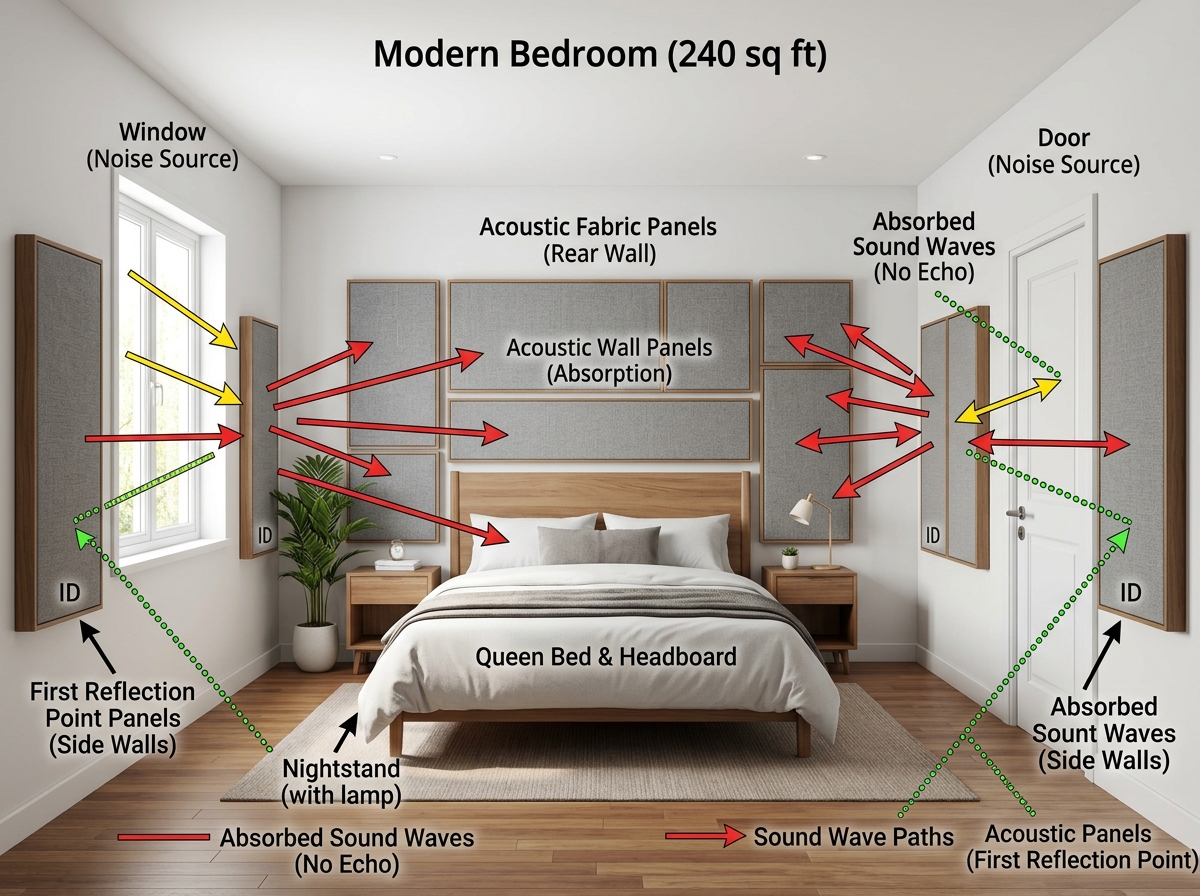
- Behind the Headboard: This is the most effective spot for sleep. By placing panels directly behind where your head rests, you eliminate the “slap back” echo that happens when noise hits the wall behind you. It creates a “hush” zone right around your ears.
- Opposite the Window: If traffic noise is leaking through your window, it will hit the opposite wall and bounce around the room. Placing panels on the wall facing the window “catches” that incoming noise and prevents it from echoing.
- The Shared Wall: If you can hear your neighbor’s TV, you should treat the shared wall. While panels won’t stop the sound from coming through the wall (that requires mass), they will stop the sound from bouncing around once it enters your room, making it much less intrusive.
- Ceiling Clouds: If you have high ceilings or hardwood floors, the ceiling is a major reflection point. Suspending a few light panels (often called “clouds”) can significantly drop the ambient noise level.
- First Reflection Points: Imagine the wall is a mirror. If you sat on your bed and looked at the wall, the “first reflection point” is the spot where you would see the door or window in the reflection. Treating these specific spots provides the highest “bang for your buck.”
Installation Guide: Rental-Friendly and Permanent Methods
At TechAvanco, we know many of our readers are renters or simply don’t want to ruin their drywall with heavy adhesives. Here is how to get your acoustic panels bedroom noise setup installed safely.
- Command Strips (Rental-Friendly): For lightweight foam or PET felt panels, heavy-duty 3M Command Strips are perfect. They hold the weight well and peel off without taking the paint with them.
- Z-Clips (Permanent): These are metal rails that interlock. One is screwed into the wall, and the other is attached to the back of a heavy fabric-wrapped panel. This allows you to “hang” the panel like a picture frame, making it easy to remove for cleaning.
- Impaling Clips: These are small metal plates with sharp spikes. You screw the plate to the wall and literally “push” the mineral wool panel onto the spikes. It’s fast and secure but does leave small holes in the panel backing.
- Spray Adhesive: Use this only if you never plan on moving the panels. It provides a permanent bond but will almost certainly damage the drywall if you try to pull the panels down later.
- Mechanical Fasteners: For ceiling installations, always use mechanical fasteners like screws with toggle bolts. You do not want a panel falling on you in the middle of the night!
If you’re feeling handy, our tutorial-for-building-acoustic-panels walks you through the entire process of construction and mounting.
Frequently Asked Questions about Bedroom Soundproofing
Can acoustic panels block traffic noise or loud neighbors?
This is the most common question we get. It is vital to distinguish between sound absorption and soundproofing.
- Acoustic panels are for absorption. They are like a sponge that soaks up water (sound) already inside the room. They will make the traffic noise that does get in sound much quieter and less “sharp,” but they won’t stop it from entering.
- Soundproofing requires mass. To truly block a loud neighbor or a lawnmower, you need heavy materials like Mass-Loaded Vinyl (MLV) or extra layers of drywall. However, adding acoustic panels to a room often provides enough “perceived” noise reduction (up to 30-40% improvement in comfort) that people find they no longer need heavy construction.
Are there eco-friendly and safe options for sleeping areas?
Absolutely. Since you spend 8 hours a day breathing in your bedroom, safety is a priority.
- Look for panels that are VOC-free (Volatile Organic Compounds) and Formaldehyde-free.
- Recycled PET panels are excellent because they don’t shed fibers and are hypoallergenic.
- Natural fiber panels made from cotton or hemp are also becoming popular, though they often require a fire-retardant treatment to be safe for home use.
How do I maintain and clean my bedroom panels?
Acoustic panels can be dust magnets.
- Foam: Use a vacuum with a soft brush attachment once a month. Avoid getting them wet, as foam can trap moisture and grow mold.
- Fabric-Wrapped: These can be treated like upholstery. Regular light vacuuming is best. If there’s a stain, use a “dry foam” upholstery cleaner.
- PET Felt: These are very durable and can be wiped down with a damp cloth.
- Humidity: In very humid climates, ensure your room is well-ventilated. Dense panels can hold onto moisture, which might affect their performance or longevity over several years.
Conclusion
Creating a silent sanctuary doesn’t have to be a multi-thousand dollar renovation. By understanding the science of acoustic panels bedroom noise and choosing the right materials for your specific needs, you can reclaim your sleep and your sanity.
Whether you choose the DIY route with our recording setup guides or invest in high-end acoustic art, the goal is the same: a bedroom that feels like a cocoon against the noisy world outside. At TechAvanco, we believe that cost-effective home improvement is the key to a better life. Start small—perhaps with a few panels behind your headboard—and experience the immediate difference that a little bit of science can make for your sleep quality.
