
How to Treat Your Ceiling for Perfect Room Acoustics
Why Sound Absorbing Ceiling Panels Make a Real Difference at Home
Sound absorbing ceiling panels are acoustic materials mounted to or suspended from your ceiling to reduce echo, reverberation, and background noise inside a room.
Quick answer: What do they do?
- Reduce echo and reverb – porous materials trap sound waves and convert them to a tiny amount of heat
- Improve speech clarity – voices sound cleaner and less “muddy”
- Boost focus and comfort – less ambient noise means less mental fatigue
- Do NOT block sound between rooms – that requires soundproofing, which is a different approach entirely
If your bedroom, home office, or living space feels loud and echoey, the ceiling is often the biggest untreated surface in the room. Walls get all the attention, but sound bounces off a hard ceiling just as aggressively.
The good news? You don’t need a recording studio budget to fix it.
Acoustic ceiling treatments range from simple peel-and-stick foam tiles under $2 per square foot all the way up to premium commercial panels. There’s something for almost every budget.
One thing worth knowing before you dive in: absorption and soundproofing are two very different things. Panels that absorb sound make the inside of your room quieter and clearer. They won’t stop your upstairs neighbor’s footsteps from coming through. That distinction matters a lot when choosing the right solution.
The Science of Sound Absorption vs. Soundproofing
To master your room’s acoustics, we first need to look at the “Two Pillars” of sound control: absorption and attenuation. While they are often used interchangeably in casual conversation, in physics, they serve two different masters.
Understanding NRC Ratings (Absorption)
When we talk about sound absorbing ceiling panels, the gold standard metric is the Noise Reduction Coefficient (NRC). This rating ranges from 0 to 1.0.
- An NRC of 0.0 means the surface is perfectly reflective (like a mirror for sound).
- An NRC of 1.0 means the material absorbs 100% of the sound that hits it.
For example, many high-performance panels, like Eclipse™ Acoustical Panels for Noise Reduction | Acoustical Ceiling Tile | USG, carry an NRC of 0.70 or higher. This means they soak up 70% of the sound energy, converting it into trace amounts of heat within the porous fibers of the panel. This process effectively “kills” the echo, preventing sound waves from bouncing back into the room and creating that annoying “cavern” effect.
Understanding CAC Ratings (Blocking)
If your goal isn’t just to stop echoes but to stop your teenager’s music from leaking into your home office, you need to look at the Ceiling Attenuation Class (CAC). This rating measures how much sound is blocked from traveling through the ceiling into the “plenum” (the space above the ceiling) and into the next room. A CAC of 35 or higher is considered high performance for speech privacy.
How it Works
Think of a sponge versus a brick. A sponge (absorption) sucks up water so it doesn’t splash back at you. A brick (blocking/soundproofing) stops the water from moving to the other side. Most sound absorbing ceiling panels are “sponges.” They improve the quality of sound within the room, making speech more intelligible and music more crisp by reducing decibel build-up.
Choosing the Right Sound Absorbing Ceiling Panels
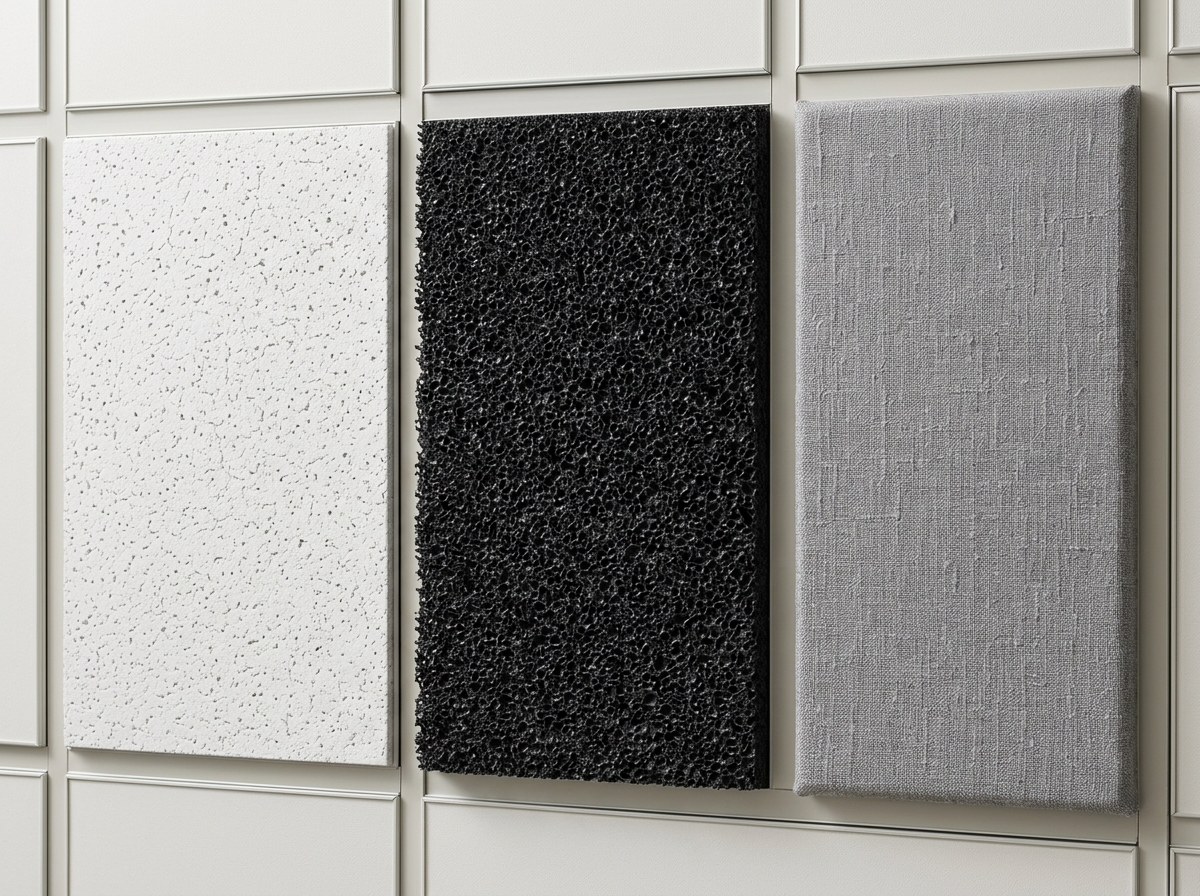
Selecting the right panel is a balance between acoustic needs, safety, and how much you want to stare at your ceiling. We generally categorize panels by their base material, as this dictates their performance.
Common Material Types
- Mineral Fiber: The “classic” office tile. These are durable, often sag-resistant, and offer a great balance of NRC and CAC.
- Fiberglass: These often have the highest NRC ratings (sometimes up to 0.95 or 1.00). Panels like Halcyon™ Acoustical Ceiling Panels | USG are lightweight and exceptional at killing noise in open-plan spaces.
- Recycled Cotton and Polyester: These are the eco-friendly heroes. Some polyester panels are made from recycled water bottles. They are non-toxic, non-carcinogenic, and “fiber-free,” meaning they won’t shed itchy particles into your air.
- Wood Fiber: These provide a natural, aesthetic look and are often used in “cementitious” forms for high-durability areas like gyms.
Safety and Durability
When shopping, we always recommend looking for a Class A fire rating (per ASTM E84). This ensures the panels won’t contribute significantly to flame spread or smoke in an emergency. Additionally, if you are treating a basement or a humid area, look for “ClimaPlus” or humidity-resistant features to prevent the panels from sagging over time.
Benefits of Sound Absorbing Ceiling Panels in Home Offices
In the era of remote work, the home office has become a high-stakes acoustic environment. Have you ever been on a Zoom call where you sounded like you were broadcasting from a bathroom? That’s poor ceiling acoustics at work.
Increasing noise in home and open office environments substantially reduces performance on cognitively demanding tasks. By installing sound absorbing ceiling panels, we can:
- Enhance Focus: Reducing the “hum” of the house allows for deeper concentration.
- Improve Professionalism: Clearer audio on calls makes a better impression on clients and colleagues.
- Reduce Fatigue: Your brain works hard to filter out echoes. When the room is acoustically “dead,” you feel less drained at the end of the day.
For those just starting out, using foam panels effectively can be a quick win for a small desk nook.
Customizing Your Sound Absorbing Ceiling Panels
Gone are the days when acoustic ceilings had to look like a 1990s elementary school. Modern treatments are design-forward.
- Colors: Many manufacturers now offer custom color matching with Sherwin-Williams codes. You can have your ceiling match your walls perfectly.
- Shapes: Hexagons, circles, and triangles are popular for “clouds” (panels suspended from the ceiling).
- Paintability: Some specialized tiles are designed to be spray-painted with non-bridging acoustic paint, allowing you to change your decor without ruining the NRC rating.
Strategic Placement and Installation Methods
Where you put the panels is just as important as which ones you buy. We want to target “first reflection points.” If you’re sitting at a desk, the spot on the ceiling directly between your mouth and your computer screen is a primary reflection point.
The 6-Inch Rule
For maximum effectiveness, we recommend spacing panels at least 6 inches apart. This allows the edges of the panels to absorb sound as well, increasing the total surface area of absorption.
Installation Comparison Table
| Method | Best For | Pros | Cons |
|---|---|---|---|
| Drop-in Tiles | Basements/Offices | Easy access to wires/pipes | Requires a T-bar grid |
| Direct Mount | Low Ceilings | Saves head room | Permanent (uses adhesives) |
| Clouds/Baffles | High/Vaulted Ceilings | Modern look; 2-sided absorption | More complex mounting |
For direct mount, we often use heavy-duty construction adhesives or mechanical fasteners like Rotofast anchors. If you have a standard drywall ceiling, a “direct mount” approach with fabric-wrapped panels provides a clean, high-end look without the need for a metal grid.
Budget-Friendly Alternatives and DIY Solutions
At TechAvanco, we know that professional-grade acoustic panels can get expensive—sometimes upwards of $15 per square foot. If you’re on a budget, you can still achieve great results with a little elbow grease.
Building Your Own
You can create high-performance panels using a wooden frame, some mineral wool or recycled cotton insulation, and acoustically transparent fabric (like burlap or specialized polyester). We have a great tutorial for building acoustic panels that walks you through the process.
Inexpensive Wins
- Acoustic Foam: While not as effective at low frequencies as thick panels, foam is great for killing high-frequency “flutter” echoes. Check out our step-by-step guide for DIY acoustic foam panels to see how to mount them without ruining your drywall.
- Soft Goods: In a pinch, even heavy moving blankets or thick curtains can act as cheap methods to absorb sound.
- DIY Wall/Ceiling Hybrids: If you’re just starting out, inexpensive diy wall panels for your studio can often be adapted for ceiling use with the right mounting hardware.
For more beginner-friendly advice, see our guide on diy soundproofing acoustic panels for beginners.
Frequently Asked Questions about Ceiling Acoustics
Do acoustic ceiling panels block noise from upstairs neighbors?
Generally, no. Most sound absorbing ceiling panels are designed for absorption (NRC), not blocking (CAC). To stop footfall noise from above, you usually need to add mass (like Mass Loaded Vinyl) and “decouple” the ceiling using resilient clips and channels. Absorption panels will only make the echo of those footsteps slightly less sharp.
Can I paint my sound absorbing panels without ruining their performance?
Only if you use the right paint and technique. Standard latex paint will “bridge” the pores of the material, turning your acoustic sponge into a reflective hard surface. If you must paint, use a non-bridging acoustic spray paint and apply light coats to ensure the pores remain open to “swallow” the sound.
How many panels do I need for a standard-sized room?
A good rule of thumb for standard rooms is 15-25% coverage of the total surface area (walls and ceiling combined). For a 10×12 room, starting with 4 to 6 large sound absorbing ceiling panels (2’x4′) is usually enough to notice a massive difference in speech clarity.
Conclusion
Treating your ceiling is one of the most overlooked yet impactful ways to improve your home’s comfort and productivity. Whether you opt for premium fiberglass tiles or a weekend DIY project with recycled cotton, the reduction in echo and mental fatigue is well worth the effort.
At TechAvanco, we believe that a quiet home is a productive home. By focusing on cost-effective, practical improvements, you can transform a noisy, stressful room into a sanctuary for work or relaxation.
Ready to take the next step in your home improvement journey? Check out More DIY soundproofing tips for more ways to enhance your space on a budget!
