
Why Noise Is Ruining Your Home (And What You Can Do About It)
Soundproof DIY for a room is one of the most searched home improvement topics — and for good reason. In England alone, a noise complaint is filed for every 160 people. Meanwhile, 20% of the population lives in areas where traffic noise is loud enough to harm health.
Here are the most effective DIY soundproofing methods you can start today:
- Seal gaps around doors and windows with acoustic caulk and weatherstripping
- Add mass to walls using bookshelves, furniture, or mass-loaded vinyl
- Hang heavy curtains (12–18 oz/yd fabric, with 100% fullness)
- Lay thick rugs with a tight weave (100+ KPSI) on hard floors
- Install door sweeps to block sound leaking under doors
- Build or buy acoustic panels and mount them on walls (~$20 per DIY panel)
- Use soundproof blankets to reduce room noise by 25–30%
Most of these cost between $0 and $80 — no contractor needed.
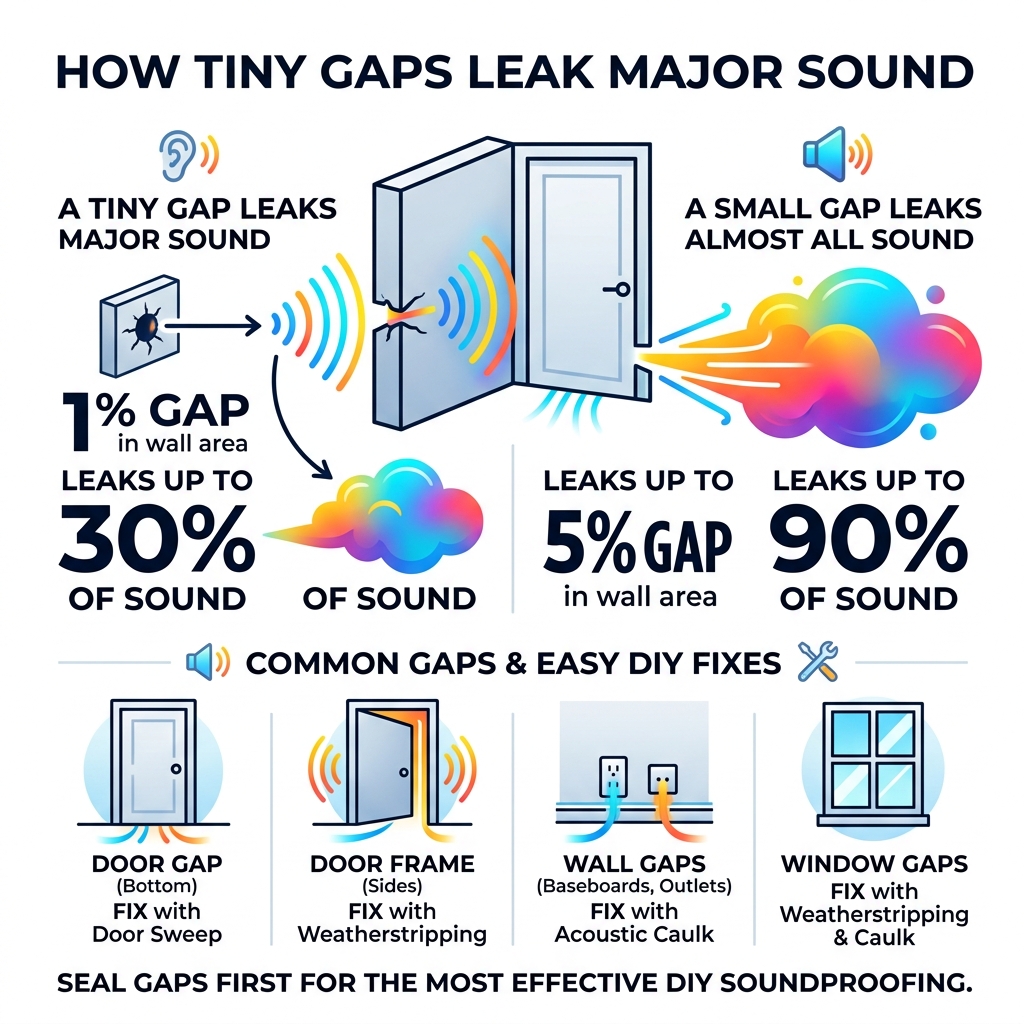
Here’s something that puts it all in perspective: a gap covering just 1% of a wall can leak up to 30% of sound. A 5% gap? Up to 90%. Soundproofing a room is a lot like patching a boat hull — even the tiniest hole matters.
The good news is that you don’t need to gut your walls or spend thousands to make a real difference. Whether you’re a renter in a thin-walled apartment or a homeowner tired of traffic rumble, there are practical, affordable options for every situation.
Before diving into solutions, it helps to understand two key ideas:
- Soundproofing = blocking sound from entering or leaving a room
- Acoustic treatment = improving how sound behaves inside a room
Most DIY guides mix these up. This one won’t.
The Science of Silence: Understanding Soundproofing vs. Acoustic Treatment
To master soundproof diy for a room, we first have to understand our enemy: the sound wave. Sound travels like water; it finds the path of least resistance. It can diffract around corners, squeeze through micro-gaps, and even vibrate through solid objects.
There is a major difference between stopping sound from coming in and stopping sound from bouncing around.
- Soundproofing (Blocking): This is about isolation. We use dense materials to stop vibrations. This is measured by STC (Sound Transmission Class). A typical hollow-core door has an STC of 17, while a solid-core door hits about 28. Our goal is usually an STC of 50 or higher for true peace.
- Acoustic Treatment (Absorption): This is about clarity. We use soft, porous materials to soak up echoes and reverberation. This is measured by NRC (Noise Reduction Coefficient), which ranges from 0 (no absorption) to 1 (total absorption).
If you’re trying to ignore a neighbor’s barking dog, you need soundproofing. If your voice sounds hollow and “echo-y” on Zoom calls, you need acoustic treatment. For more deep dives into these concepts, check out our Acoustic Tips or learn how to achieve Acoustic Treatment for Under $100.
Renter-Friendly Soundproof DIY for a Room Hacks
We know the struggle: you can’t exactly rip out the drywall in a rented apartment. Thankfully, you can still achieve a significant reduction in noise without losing your security deposit.
- The Power of Maximalism: Minimalist rooms are noise traps. Hard, empty floors and bare walls reflect sound like a ping-pong ball. Embracing a “maximalist” style—think tapestries, plush sofas, and wall-to-wall bookshelves—naturally dampens sound.
- Soundproof Blankets: These aren’t your average duvets. Professional soundproof blankets are heavy and dense. Hanging one over a door or a thin wall can reduce noise by 25-30%. For a deeper look at this, see our guide on Blanket Soundproofing: A DIY Approach.
- Strategic Furniture Placement: Move your heaviest furniture (like a massive wardrobe or a bookshelf full of books) against the “party wall” you share with a noisy neighbor. This adds mass, making it harder for sound vibrations to pass through.
For more apartment-specific advice, explore our Soundproofing Tricks for Small Apartments.
Effective Strategies for a Soundproof DIY for a Room: Walls and Layout
If you own your home or have a landlord who doesn’t mind a few screws in the wall, you can get much more aggressive. The four pillars of structural soundproofing are Mass, Damping, Decoupling, and Absorption.
- Adding Mass: Sound struggles to move heavy things. Adding a second layer of 5/8-inch Type X drywall is one of the best moves you can make.
- Damping: Use a viscoelastic compound like Green Glue between layers of drywall. It converts sound energy into heat, drastically improving the STC rating.
- Decoupling: This is the “room within a room” concept. By using resilient channels, you separate the drywall from the wall studs. This breaks the physical path that vibrations take. Pro tip: Always install resilient channels with the drywall flange facing up!
- Mass-Loaded Vinyl (MLV): This thin but incredibly dense material is a DIYer’s best friend. It’s easy to staple to studs before putting up drywall and offers professional-grade noise reduction.
If you’re looking for a project that balances cost and performance, our Bedroom Noise Reduction Techniques on a Budget is a great place to start. You can also follow this external guide on How to Build Your Own Acoustic Panels (DIY) for high-end results.
Identifying Noise Sources
Before you spend a dime, we recommend doing a “noise audit.” Not all noise is created equal:
- Airborne Noise: Voices, music, and the hum of a motorway. This travels through the air and enters through gaps.
- Impact Noise: The “thud” of footsteps from the floor above or a slamming door. This travels through the structure of the building.
- Flanking Paths: Sound is sneaky. It might enter through an electrical outlet, a vent, or even the floorboards.
Try the “glass to the wall” trick—place a glass against different parts of the wall to pinpoint exactly where the neighbor’s TV is loudest. Once you know the source, you can apply the right Easy DIY Soundproofing Hacks.
Sealing the Gaps: DIY Solutions for Windows, Doors, and Floors
1% gap stat? Most of those gaps are around your windows and doors.
The Door Dilemma
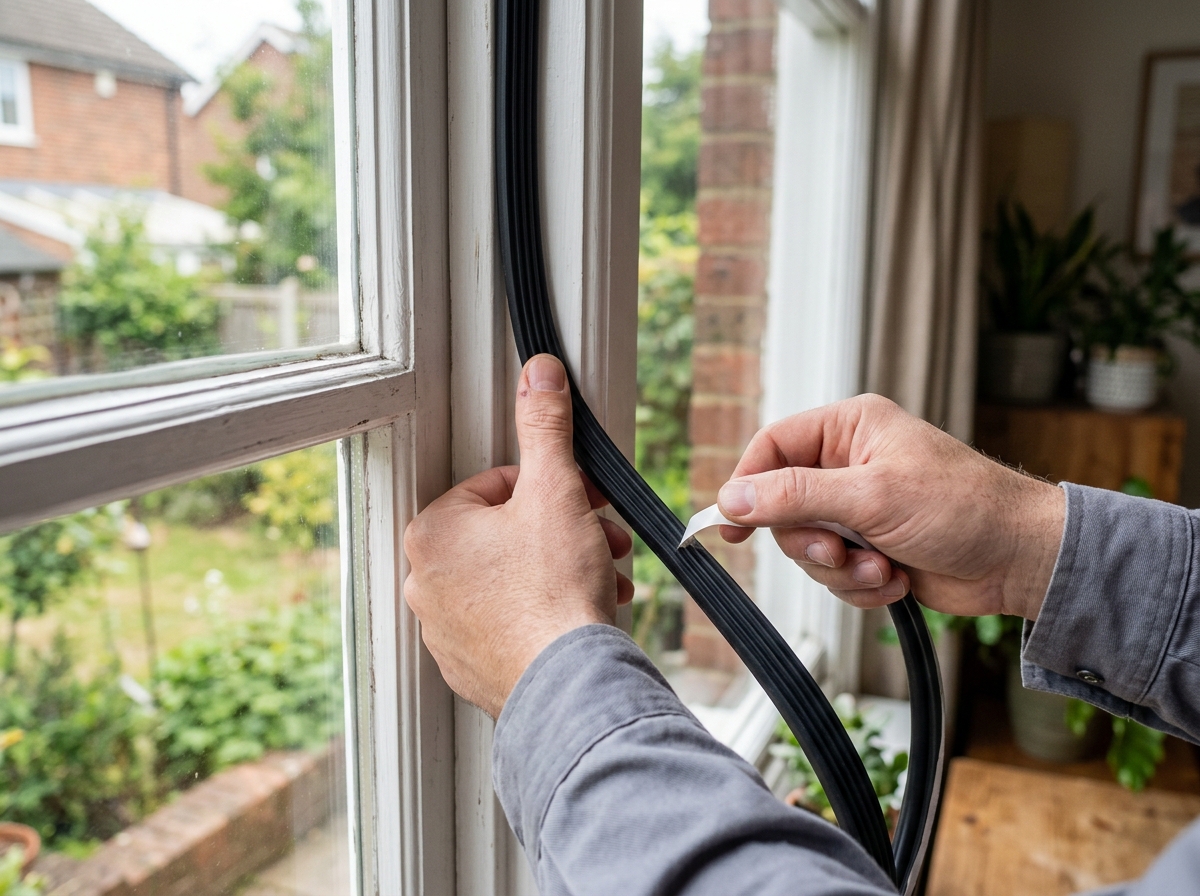
Doors are often the weakest link. Most interior doors are hollow-core, which act like a drum, amplifying sound.
- Acoustic Caulk: Seal the gap between the door frame and the wall. Standard silicone is okay, but specialized acoustic caulk stays flexible, preventing cracks where sound can leak.
- Door Sweeps: A thick rubber door sweep seals the massive gap at the bottom. This is often the single most effective thing you can do for under $20.
- Gaskets: Add adhesive-backed rubber gaskets to the door stop moldings so the door creates an airtight seal when closed.
Learn more about Soundproofing Doors Without Overspending.
Floor Fixes
Hardwood and laminate floors are beautiful, but they are noise highways.
- Rug Density (KPSI): When shopping for rugs, look at the Knots Per Square Inch. A rug with 100 KPSI is good, but 300+ KPSI is great for sound. Interestingly, a higher pile only reduces sound by about 2%—it’s the density of the weave that matters.
- Underlayment: If you’re laying new floors, don’t skip the acoustic underlayment. Rubber or felt pads are far superior to thin foam.
Check out our Affordable Floor Solutions for Better Soundproofing for more tips.
Window Treatments for Noise Reduction
Windows are essentially “holes” in your sound barrier. Short of installing noise-reducing glass (which can reduce sound by 40dB), window treatments are your best bet.
- Fabric Weight: For curtains to block sound, they need to be heavy. Aim for fabric that weighs between 12 oz and 18 oz/yd.
- 100% Fullness: This means if your window is 50 inches wide, you need 100 inches of curtain material. The extra folds trap sound waves.
- Mounting: For the best results, extend your curtain rod 3 to 4 inches off the wall. This creates an air gap that helps dampen vibrations.
For more window-specific hacks, see Window Soundproofing Solutions That Won’t Break the Bank.
Building Your Own Sound-Absorbing Panels for Professional Results
If you want your room to sound like a professional studio (or just want to stop the echo in your home office), DIY acoustic panels are the way to go. Commercial panels can cost $100 each, but we can build them for about $20 per panel.
Material Matters
- Core: Rockwool (Safe’n’Sound) or rigid fiberglass (Owens Corning 705) are the gold standards. They are much denser than thermal insulation.
- Fabric: It must be “acoustically transparent.” Use the exhale test: hold the fabric to your mouth and blow. If you feel the air pass through easily, it’s good. Burlap, linen, and certain polyesters work well.
- Air Gaps: Mounting a panel 2 inches away from the wall actually doubles its effectiveness for low-frequency sounds!
| Feature | DIY Panel | Commercial Panel |
|---|---|---|
| Cost | ~$20 | $60 – $150 |
| Customization | Infinite (any fabric) | Limited |
| Effectiveness | High (if using Rockwool) | High |
| Build Time | 30-45 mins | 0 mins |
For a deep dive into the building process, read our guide on DIY Soundproofing Acoustic Panels for Beginners.
Step-by-Step: Building a Soundproof DIY for a Room Panel
Ready to get your hands dirty? Here is our simplified process:
- Build the Frame: Use 1×3 pine furring strips to create a rectangular frame (usually 24″ x 48″). Use wood glue and screws for stability.
- Insert Insulation: Snugly fit your Rockwool slab into the frame. You don’t want to compress it; squashed insulation loses its sound-absorbing powers.
- Backing: Staple a thin mesh or landscaping fabric to the back to keep the insulation fibers contained.
- Wrap in Fabric: Lay your decorative fabric face down, place the frame on top, and staple the fabric to the back. Think of it like wrapping a present—keep the corners neat!
- Mounting: Use Z-clips or heavy-duty picture wire. Remember to leave that 2-inch air gap if you can.
Need more visuals? Follow our Tutorial for Building Acoustic Panels.
Frequently Asked Questions about Soundproofing
What is the cheapest way to soundproof a wall?
The absolute cheapest way is rearranging furniture. Placing a heavy, book-filled bookshelf against the shared wall adds mass and breaks up sound reflections for $0. If you have a small budget, acoustic caulk and weatherstripping offer the most “bang for your buck.”
Can you make a room 100% soundproof?
In a standard home? Technically, no. To achieve 100% silence, you’d need an “anechoic chamber” like the one Microsoft built, which involves massive concrete walls and specialized floor springs. However, you can reduce noise by 70-80%, which feels like total silence compared to a noisy street.
Do egg cartons actually work for soundproofing?
This is a classic myth! Egg cartons are too thin to block sound and too hard to absorb it. They might slightly diffuse high-frequency sounds, but they are mostly just a fire hazard. Don’t waste your time—stick to Rockwool or heavy blankets.
Conclusion
At TechAvanco, we believe that a quiet home is a productive home. Achieving a soundproof diy for a room doesn’t require a degree in acoustic engineering or a massive bank account. By starting with the “low-hanging fruit”—sealing gaps, adding rugs, and hanging heavy curtains—you can reclaim your peace of mind today.
Whether you’re building professional-grade panels or just stuffing a draft stopper under your door, every step counts. Ready for your next project? Explore our full library of DIY Soundproofing guides to keep the noise at bay. Stay quiet, friends!
